

An overactive thyroid nodule? Switch it off — without surgery or radioactive iodine.
Toxic nodule RFA at a glance
Hyperthyroidism normalized in study6
A toxic thyroid nodule is a nodule that autonomously overproduces thyroid hormone, causing hyperthyroidism — as a single toxic adenoma or as a toxic multinodular goiter. It’s the second most common cause of hyperthyroidism in the US after Graves’ disease.3 Beyond antithyroid drugs, radioactive iodine, and surgery, radiofrequency ablation (RFA) offers a minimally invasive option: an ultrasound-guided electrode heats and eliminates only the overactive nodule, sparing the healthy thyroid.4 In a multicenter study, RFA improved hyperthyroidism in all subjects and normalized it in 81.8%, with no hypothyroidism or major complication.6
Autonomously makes excess hormone
Targets only the toxic nodule4
Hyperthyroidism resolved in study6
No radioactive iodine, no scar
What are toxic thyroid nodules?
A toxic nodule is one that autonomously produces excess thyroid hormone — causing hyperthyroidism. One nodule is a toxic adenoma; several are a toxic multinodular goiter.
A thyroid nodule is an abnormal growth or mass within the thyroid, a butterfly-shaped gland located in the front of the neck. Fortunately, approximately 95% of these masses are benign.1 However, this does not always mean their presence will go unnoticed. In fact, a small nodule — or even a group of them (typically benign) — can start autonomously producing excess thyroid hormone.
As a consequence, the hyperfunctioning nodule(s) can cause enlargement of the gland (goiter) and a condition known as hyperthyroidism (overactive thyroid). If a single autonomous nodule is involved, it is known as a toxic thyroid nodule or a toxic adenoma. If more than one nodule is involved, it is called a toxic multinodular goiter. Importantly, toxic nodular goiter (TNG) is a broader term that encompasses both conditions.2
How is a toxic thyroid nodule diagnosed?
Blood tests confirm hyperthyroidism (high thyroid hormones, low TSH), and a nuclear medicine scan shows which nodule is overactive.4
What are the treatment options?
The goal is the rapid, long-lasting elimination of hyperthyroidism. Options are antithyroid drugs, radioactive iodine, surgery — and, increasingly, minimally invasive RFA.4
The goal of treatment for TNG is the rapid and long-lasting elimination of the state of hyperthyroidism. The most common treatment options for hyperthyroidism are antithyroid drugs, radioiodine therapy, and surgery. Additionally, minimally invasive procedures such as radiofrequency ablation (RFA) have become available.4 The choice of treatment depends on the severity of the hyperthyroidism, coexisting conditions, contraindications to specific modalities, and the patient’s preferences.4
Medications
Antithyroid drugs can be prescribed to treat the hyperthyroidism caused by toxic nodules, and beta-blockers can help diminish hyperthyroidism-related symptoms (such as increased heart rate) if present.2 However, these drugs only temporarily control thyroid hormone production and prevent complications. If this treatment is suspended, the hyperthyroidism reappears — so these medications are more of a bridge to definitive therapy than a final solution for TNG.2 Antithyroid drugs can also help control hormone production in preparation for definitive treatments such as surgery or radioactive iodine.
Radioiodine therapy
Radioiodine therapy is widely used as a definitive treatment for toxic adenoma and toxic multinodular goiter — in fact, it is the most widely used treatment for toxic nodules in the United States.5 The thyroid takes up almost all the iodine in the body, so when radioactive iodine (I-131) is administered it accumulates in the overactive tissue and destroys it. Toxic nodules can then decrease in size and the symptoms of hyperthyroidism can subside, usually within 2–3 months.
A single dose has been shown to reduce goiter size by up to 40% and usually succeeds in 85–100% of patients with toxic nodular goiter.2 However, a complication known as hypothyroidism (underactive thyroid) can occur in up to 10–20% of patients.2 Possible indications include advanced age, small goiter size, significant coexisting diseases, and prior surgery or scarring of the anterior neck.4 The main contraindications are pregnancy, lactation, and coexisting thyroid cancer.4 Notably, high-activity radioiodine can only decrease the size of large goiters by 30–50% and improves compressive symptoms in 46% of patients, whereas complete surgical removal resolves these symptoms in all patients.4
Surgery
Our Patient Experiences
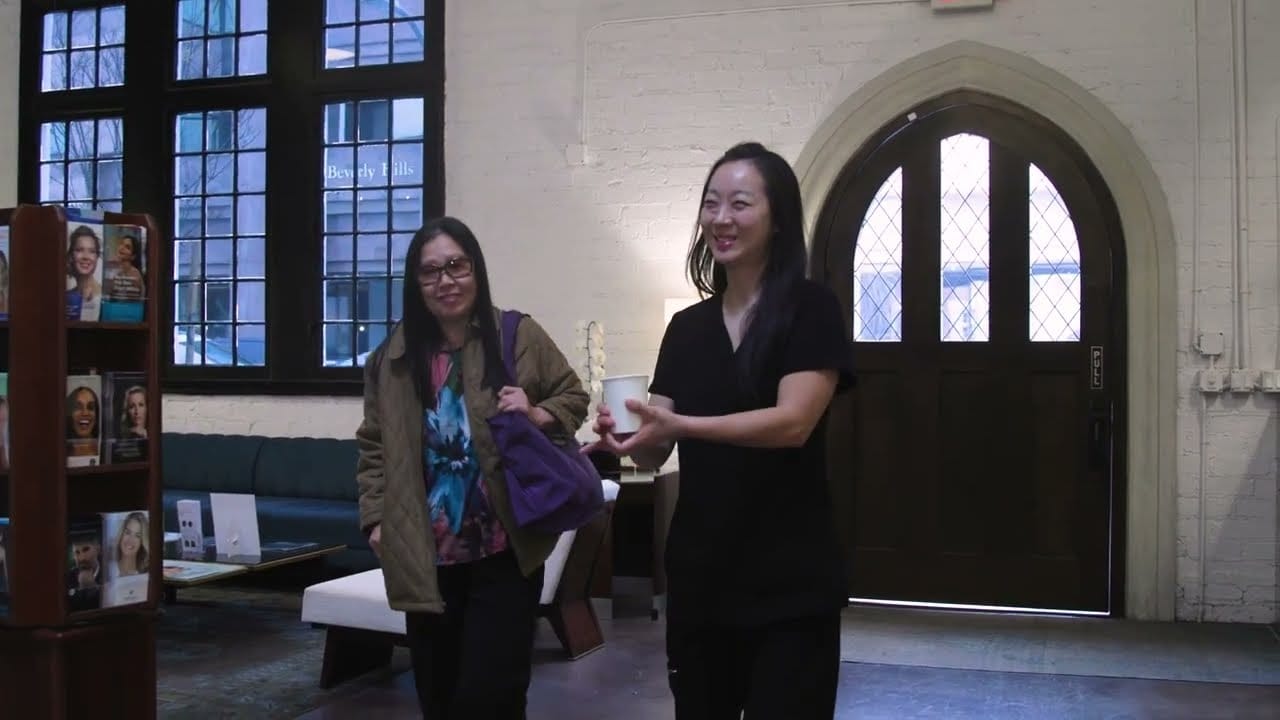
Our patients tell their own RFA stories — symptoms resolved, surgeries avoided, thyroids saved.
More than
More than
Non-surgical RFA for toxic thyroid nodules
RFA uses an ultrasound-guided needle electrode to heat and eliminate the activity of the overactive nodule — no surgery, no radioactive iodine, no scar.4
Promising minimally invasive procedures are available for patients with toxic thyroid nodules. If long-term medical treatment, surgery, or radioiodine therapy are inappropriate or contraindicated, a procedure known as radiofrequency ablation (RFA) can be considered as an alternative.4
Radiofrequency ablation is performed by trained interventional radiologists and uses high-frequency alternating current to create focalized heat and destroy tissue. In toxic nodular goiter, an ultrasound-guided needle electrode is used to specifically target and eliminate the activity of the toxic nodule — while the surrounding healthy thyroid is spared.
What the evidence shows. A large retrospective multicenter study validated the safety and efficacy of RFA for autonomously functioning nodules: associated hyperthyroidism improved in all subjects and normalized in 81.8%, with no hypothyroidism or major complication during follow-up.6 In another study comparing RFA to surgery for benign nodules, RFA had fewer complications (1% vs 6% for surgery), no resulting hypothyroidism, similar costs to surgery, and an 85% reduction in nodule size.7
Despite this promising evidence, additional large-scale studies are needed in patients with toxic thyroid nodules before RFA can be recommended as mainstream.4 Given the complexity of the procedure, the use of RFA should be limited to experienced clinicians who have received extensive training in this technique.
What happens during toxic nodule RFA?
Confirm the overactive nodule, numb the skin, guide an electrode into the nodule under live ultrasound, then ablate only the overactive tissue — and home the same day.
Confirm the toxic nodule
Blood tests confirm hyperthyroidism and a nuclear scan identifies the hyperfunctioning nodule; ultrasound maps it for treatment.
Local anesthetic
A local anesthetic numbs the skin over the thyroid. No general anesthesia and no radioactive material are used.
Ultrasound-guided electrode
Under real-time ultrasound, a fine needle electrode is placed directly into the toxic nodule.
Ablate — home the same day
Focalized heat eliminates the overactive tissue while sparing healthy thyroid. The nodule shrinks over the following months. Outpatient — no incision, no scar.
RFA vs. radioactive iodine & surgery
Radioiodine and surgery are effective — but both frequently leave the thyroid underactive. RFA is thyroid-sparing and, in studies, produced no resulting hypothyroidism.2,6,7
Radiofrequency Ablation
- Targets only the overactive nodule — spares healthy thyroid4
- Normalized hyperthyroidism in 81.8% in a multicenter study6
- No resulting hypothyroidism in studies6,7
- Fewer complications than surgery (1% vs 6%)7
- No radioactive material, no incision, no scar
- Outpatient under local anesthesia
Radioiodine & Surgery
- Radioiodine causes hypothyroidism in up to 10–20% of patients2
- Radioiodine uses radioactive material; contraindicated in pregnancy/lactation2
- Surgery can cause hypothyroidism, hypoparathyroidism, or vocal cord paralysis2
- Surgery is done under general anesthesia and leaves a scar
- Both are effective, definitive options — and remain available if needed4
RFA is only as good as the hand guiding the probe
Here's the uncomfortable truth about RFA: experience alone isn't enough. Ablating only the overactive nodule — millimeters from the nerves and vessels of the neck — means mentally building a 3D picture from a flat 2D ultrasound image, in real time, and steering to it. That spatial gift comes easily to very few. Training and volume sharpen it — but they can't install it.
Some skills can't be taught — only sharpened
Every RFA begins with a problem no diploma solves: the ultrasound screen is flat and two-dimensional, but the thyroid, the nodule, the nerves, and the vessels are arranged in three dimensions — and the needle has to reach exactly the right point in that space, guided by the image alone. Holding that 3D map in your mind while working from a 2D picture is an innate talent that comes easily to very few. You can send a hundred physicians through the same course and only a handful will ever truly see it — the rest are always translating, one step behind the tissue. Experience alone doesn’t close that gap. What experience does — and what six years of post-graduate training and thousands of ablations do — is take a physician who already has the gift and refine it to the point of instinct.
2,000+ procedures every year
A volume of ultrasound-guided work that few providers match — versus the 20–100 per year typical of weekend-trained providers.
3D vision from a 2D image
Beyond the thyroid
Ablations of more complex organs — kidney, liver, lung — sharpen the precision brought to every thyroid case.
The physician, every time
All appointments are conducted by the board-certified physician — never an assistant or non-physician provider.
Request an Appointment
Please note that although we strive to protect and secure our online communications, and use the security measures detailed in our Privacy Policy to protect your information, no data transmitted over the Internet can be guaranteed to be completely secure and no security measures are perfect or impenetrable. If you would like to transmit sensitive information to us, please contact us, without including the sensitive information, to arrange a more secure means of communication. By submitting this form you consent to receive text messages from CVI at the number provided. Msg & data rates may apply. Msg frequency varies. Unsubscribe at any time by replying STOP.
Who performs your toxic nodule RFA?
At California Thyroid Center, your procedure is performed by Dr. Atabak Allaei — by the physician, not an assistant or non-physician provider. RFA success and safety hinge on something more than credentials: the ability to translate a flat 2D ultrasound image into a precise 3D target, millimeters from the nerves and vessels of the neck. It’s a spatial talent that comes easily to very few, and experience alone can’t manufacture it — it can only sharpen it in a physician who already has it. His years of ultrasound-guided work have done exactly that.
Atabak Allaei, MD
A double board-certified imaging and interventional radiology specialist with six years of post-graduate training in ultrasound-guided procedures and ablations, performing over 2,000 ultrasound-guided procedures each year — including ablations of the thyroid as well as more complex organs such as the kidney, liver, and lung. All appointments are conducted by the board-certified physician, not assistants or non-physician providers.
Toxic thyroid nodule RFA: common questions
What is a toxic thyroid nodule?
A thyroid nodule is an abnormal growth within the thyroid, and about 95% are benign. Some nodules, however, begin autonomously producing excess thyroid hormone. This hyperfunctioning nodule can enlarge the gland (goiter) and cause hyperthyroidism (overactive thyroid). A single autonomous nodule is called a toxic thyroid nodule or toxic adenoma; when more than one is involved it is a toxic multinodular goiter. Toxic nodular goiter (TNG) is the broader term for both.
How common is toxic nodular goiter?
Toxic nodular goiter is a very common cause of hyperthyroidism — after Graves’ disease, it is the second most common cause of hyperthyroidism in the United States. It is more common in women than in men (older than 40 years), with a palpable-nodule prevalence of about 5–7% in women and 1–2% in men, and it is especially prevalent in adults older than 50.
How is a toxic thyroid nodule diagnosed?
Diagnosis starts with the signs and symptoms of hyperthyroidism, though some older patients may have atypical symptoms or none at all. It is confirmed with blood tests showing high thyroid hormone levels and a low TSH. A nuclear medicine thyroid scan (iodine-123 or technetium-99m) then locates the overactive tissue: a toxic adenoma appears as a single hyperfunctioning area, while a toxic multinodular goiter appears patchy. Ultrasound is also used to assess and monitor the nodules.
What are the treatment options for a toxic thyroid nodule?
The goal is rapid, long-lasting resolution of hyperthyroidism. Options include antithyroid drugs (a temporary bridge, since hyperthyroidism returns when stopped), radioactive iodine (the most widely used definitive treatment in the US, but it causes hypothyroidism in up to 10–20%), and surgery (thyroidectomy — effective, but with risks such as hypothyroidism, hypoparathyroidism, and vocal cord paralysis). Minimally invasive RFA has also become available as an alternative when medication, surgery, or radioiodine are inappropriate or contraindicated.
What is RFA for a toxic thyroid nodule?
Radiofrequency ablation (RFA) is a minimally invasive procedure performed by trained interventional radiologists that uses high-frequency current to create focalized heat and destroy tissue. For a toxic nodule, an ultrasound-guided needle electrode specifically targets and eliminates the activity of the overactive nodule while sparing the surrounding healthy thyroid. It requires no incision, no general anesthesia, and no radioactive material.
How effective is RFA for toxic thyroid nodules?
A large retrospective multicenter study of autonomously functioning nodules found that hyperthyroidism improved in all subjects and normalized in 81.8%, with no hypothyroidism or major complication during follow-up. In a separate comparison with surgery for benign nodules, RFA had fewer complications (1% vs 6%), no resulting hypothyroidism, costs similar to surgery, and an 85% reduction in nodule size. Larger studies specifically in toxic nodules are still needed, so RFA is best offered by experienced, extensively trained clinicians.
How does RFA compare to radioactive iodine and surgery?
Radioactive iodine and surgery are effective, but both frequently leave the thyroid underactive: radioiodine causes hypothyroidism in up to 10–20%, and thyroidectomy can cause hypothyroidism, hypoparathyroidism, or vocal cord paralysis. RFA is thyroid-sparing — it targets only the overactive nodule — and in studies produced no resulting hypothyroidism, with fewer complications than surgery and no radioactive material. It is outpatient, uses only local anesthesia, and leaves no scar.
Why choose California Thyroid Center for toxic nodule RFA?
Your procedure is performed by Dr. Atabak Allaei — the physician, not an assistant or non-physician provider. He is a double board-certified imaging and interventional radiology specialist with six years of post-graduate training in ultrasound-guided procedures and ablations, performing over 2,000 ultrasound-guided procedures each year, including ablations of the thyroid as well as more complex organs such as the kidney, liver, and lung. Because RFA success and safety hinge on precise probe placement and 3D ultrasound skill, this depth of experience matters. Consultations are available by telehealth or in person in Los Angeles, California.
1.) Hegedüs, L. (2004). The thyroid nodule. New England Journal of Medicine, 351(17), 1764–1771. https://doi.org/10.1056/nejmcp031436
2.) Philip R Orlander, M. D. (2021, June 14). Toxic nodular goiter. https://emedicine.medscape.com/article/120497-overview#a4.
3.) Vanderpump, M. P. (2011). The epidemiology of thyroid disease. British Medical Bulletin, 99(1), 39–51. https://doi.org/10.1093/bmb/ldr030
4.) Ross, D. S., Burch, H. B., Cooper, D. S., Greenlee, M. C., Laurberg, P., Maia, A. L., Rivkees, S. A., Samuels, M., Sosa, J. A., Stan, M. N., & Walter, M. A. (2016). 2016 American Thyroid Association guidelines for diagnosis and management of hyperthyroidism and other causes of thyrotoxicosis. Thyroid, 26(10), 1343–1421. https://doi.org/10.1089/thy.2016.0229
5.) Kravets, I. (2016, March 1). Hyperthyroidism: Diagnosis and treatment. American Family Physician. https://www.aafp.org/afp/2016/0301/p363.html#afp20160301p363-b2.
6.) Sung, J. Y., Baek, J. H., Jung, S. L., Kim, J.-hoon, Kim, K. S., Lee, D., Kim, W. B., & Na, D. G. (2015). Radiofrequency ablation for Autonomously Functioning Thyroid Nodules: A Multicenter Study. Thyroid, 25(1), 112–117. https://doi.org/10.1089/thy.2014.0100
7.) Che, Y., Jin, S., Shi, C., Wang, L., Zhang, X., Li, Y., & Baek, J. H. (2015). Treatment of benign thyroid nodules: Comparison of surgery with radiofrequency ablation. American Journal of Neuroradiology, 36(7), 1321–1325. https://doi.org/10.3174/ajnr.a4276
The above information explains what is involved and the possible risks. It is not meant to be a substitute for informed discussion between you and your doctor, but can act as a starting point for such a discussion.
Explore related treatments
Thyroid Nodule RFA
RFA for large or symptomatic benign nodules.
Thyroid Goiter (TAE)
Embolization to shrink a large goiter.
Parathyroid Adenoma RFA
Ablation for an overactive parathyroid gland.
Graves' Disease Treatment
Non-surgical options for Graves' hyperthyroidism.
Compare All Treatments
RFA, TAE, radioiodine and surgery side by side.
Meet Our Specialist
The physician who performs your treatment.
Calm an overactive nodule — keep your thyroid
Request an appointment to meet with our RFA specialist, who will review your imaging, labs and history to determine whether you are a good candidate and the outcomes you can expect. Each person is an individual and should discuss the potential risks and benefits of thyroid RFA and other treatments with our doctor. Appointments are available by telehealth or in person in Los Angeles, California.